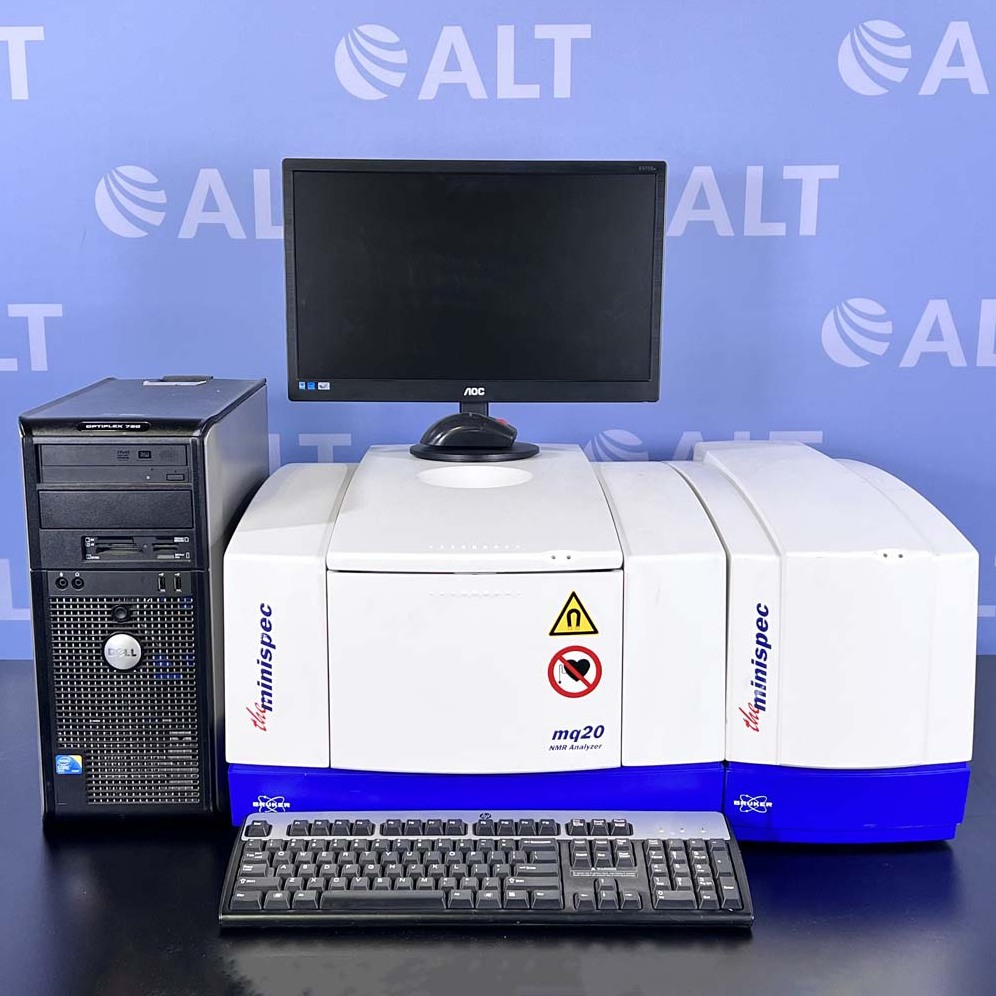
NMR
Nuclear Magnetic Resonance (NMR) spectroscopy is a powerful analytical technique used to determine the structure and dynamics of molecules at the atomic level. NMR instruments exploit the magnetic properties of certain atomic nuclei, providing detailed information about a molecule's composition, connectivity, and three-dimensional structure. The technique works by placing a sample within a strong magnetic field and then exposing it to radio waves. Certain atomic nuclei, like hydrogen-1 (1H) and carbon-13 (13C), absorb these radio waves at specific frequencies depending on their chemical environment. The NMR instrument detects these absorptions, generating a spectrum that reveals the different types of nuclei present in the sample and their relative positions within the molecule. This data is essential... + More
Nuclear Magnetic Resonance (NMR) spectroscopy is a powerful analytical technique used to determine the structure and dynamics of molecules at the atomic level. NMR instruments exploit the magnetic properties of certain atomic nuclei, providing detailed information about a molecule's composition, connectivity, and three-dimensional structure. The technique works by placing a sample within a strong magnetic field and then exposing it to radio waves. Certain atomic nuclei, like hydrogen-1 (1H) and carbon-13 (13C), absorb these radio waves at specific frequencies depending on their chemical environment. The NMR instrument detects these absorptions, generating a spectrum that reveals the different types of nuclei present in the sample and their relative positions within the molecule. This data is essential for various applications, including identifying unknown compounds, determining the purity of substances, and studying molecular interactions. NMR spectroscopy supports numerous workflows across diverse scientific fields. In organic chemistry, NMR is routinely used for structural elucidation of synthesized compounds, reaction monitoring, and studying molecular dynamics. In pharmaceutical research, it plays a crucial role in drug discovery and development, providing insights into drug-target interactions and pharmacokinetics. Material scientists use NMR to characterize the structure and properties of new materials, including polymers and nanomaterials. Furthermore, NMR finds applications in metabolomics, food science, and environmental analysis. Common techniques associated with NMR include 1H NMR, 13C NMR, two-dimensional NMR (e.g., COSY, HSQC, HMBC), and solid-state NMR. These techniques offer different levels of information and are selected based on the specific research question. Leading manufacturers of NMR instruments include Bruker, Varian (now part of Agilent), and JEOL. These companies produce a wide range of NMR systems, from benchtop instruments suitable for routine analysis to high-field research-grade spectrometers capable of performing advanced experiments. Specific models such as the Bruker Avance Neo and the Agilent ProPulse offer high sensitivity and resolution, making them suitable for demanding applications. American Laboratory Trading (ALT) offers a selection of refurbished NMR instruments at a significant cost savings compared to purchasing new. These instruments undergo rigorous refurbishment and testing by our experienced engineers, ensuring they meet original equipment manufacturer (OEM) specifications. Each instrument comes with a 90-day warranty, upgradable to three years, and includes lifetime support. ALT's comprehensive service ensures that researchers can access high-quality NMR instruments without exceeding their budget. We also provide price match guarantees and flexible payment options. Our extensive inventory and dedicated support team make acquiring and maintaining reliable NMR equipment accessible to a wide range of laboratories. - Less
Refine Search: